
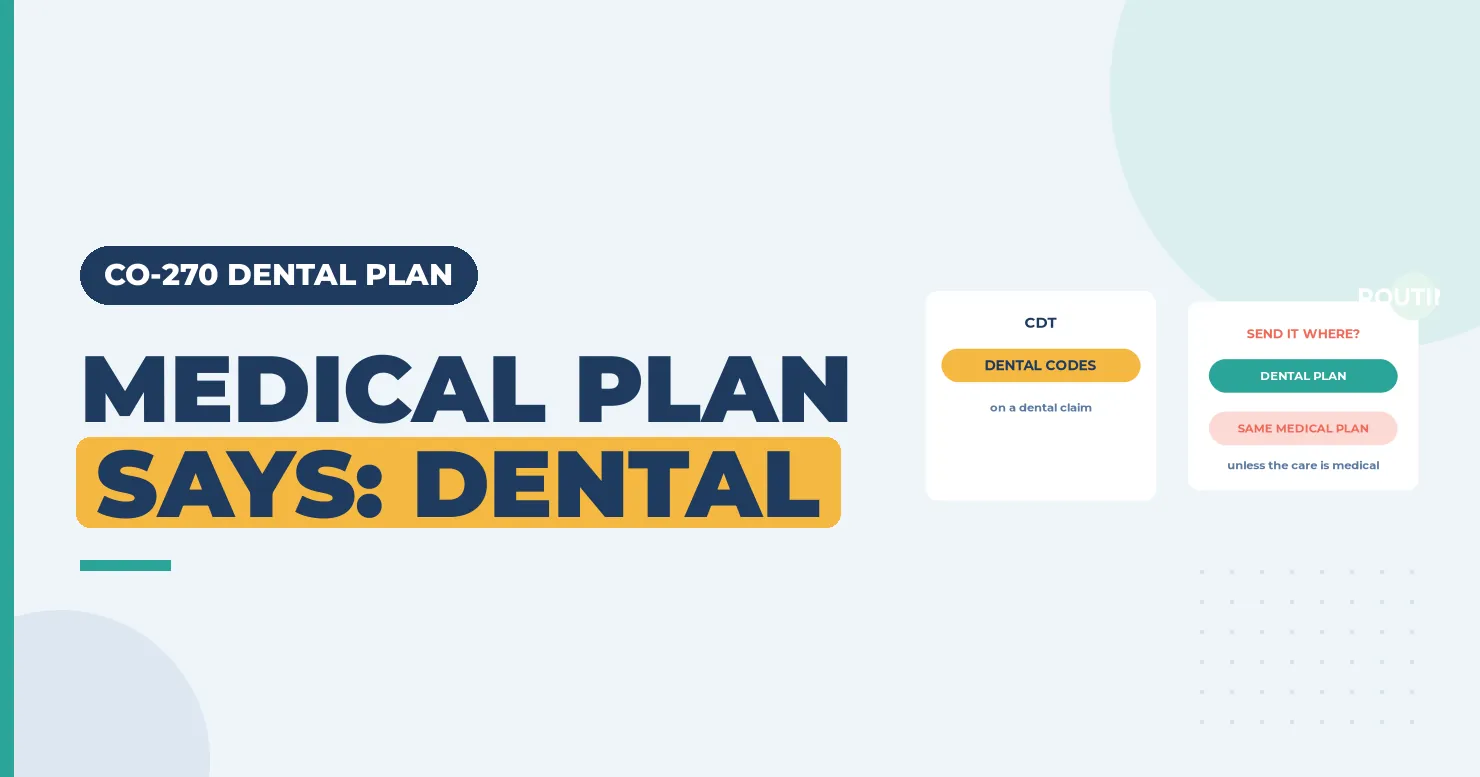
CO-270 is a routing denial. A medical plan received a claim for a service it treats as dental. It isn’t saying the service was wrong. It’s saying the dental plan is the place to send it. (Primary source: X12 Claim Adjustment Reason Codes)
In brief: CARC 270 reads “Claim received by the medical plan, but benefits not available under this plan. Submit these services to the patient’s dental plan for further consideration.” Get the dental plan details, send a dental claim, and appeal to medical only when the service is truly medical.
Part of our denial codes library. Written by Manikandan J, CPC, CRCR, who has sorted medical and dental claim routing for oral surgery and hospital clinics. Published 24 October 2026. Last updated: 24 October 2026. Code wording quoted word for word from X12. Read about the author and our editorial policy, or contact us to report an error.
Exact wording
| Field | Value |
|---|---|
| Code | 270 |
| Description | “Claim received by the medical plan, but benefits not available under this plan. Submit these services to the patient’s dental plan for further consideration.” |
| Start | 11/01/2014 |
Source: X12 Claim Adjustment Reason Codes, checked 24 October 2026. If the medical plan forwarded the claim to the dental plan itself, X12 points to CARC 291 instead.
Key terms: A CARC is a Claim Adjustment Reason Code from the X12 list, and it says why a line was paid differently than billed. A RARC is a Remittance Advice Remark Code that adds detail to the CARC. The group code is the two-letter prefix on the adjustment; CO means contractual obligation: the provider owns the balance and it cannot be billed to the patient.
Methodology: the code wording above is copied from the X12 list, and each fix step below links to the payer or CMS page it comes from.
Example scenario (fictional names), part 1
CO-270 Denial Example: What Happened
Grace Lin works the front desk at Harbor Oral Surgery, a fictional practice. A patient had a wisdom tooth removed.
The claim went to the patient’s medical plan. The remit came back with CAS*CO*270.
Where should Grace send the claim now? Keep reading, or jump to how the CO-270 denial was resolved.
Why medical plans send these back
- Routine dental work. Fillings, cleanings and most extractions are dental benefits, not medical ones.
- No dental rider. For example, many medical plans for adults don’t include dental care at all, as HealthCare.gov explains.
- Wrong codes for the setting. A dental CDT service sent on a medical claim often triggers this code.
- Missed second card. The patient’s dental card wasn’t collected at check-in.
Dental plan or medical plan?
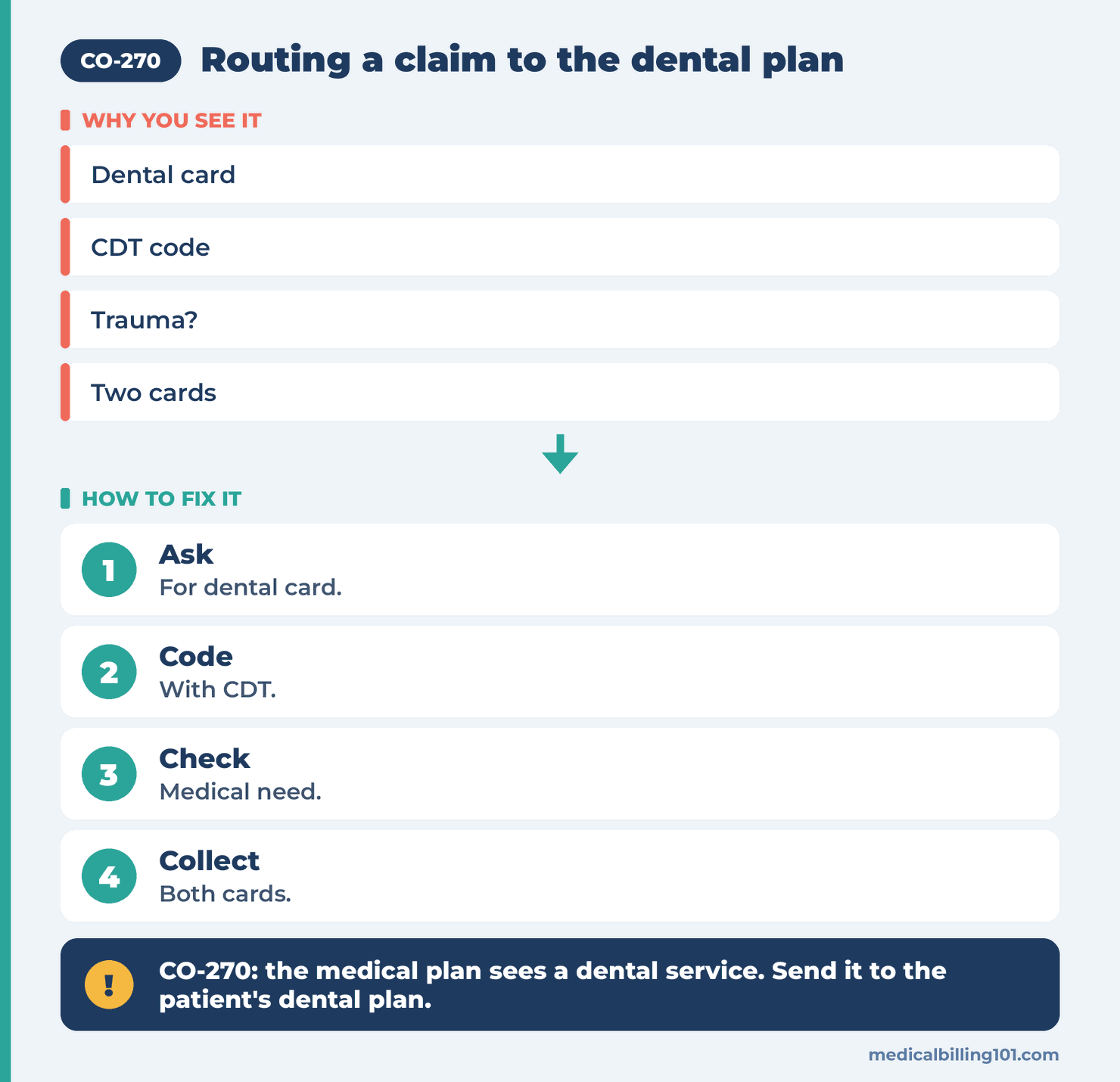
- Ask for the dental card. Get the dental payer, member ID and group.
- Use dental codes. Bill the service with CDT codes on the dental claim form.
- Check if it is medical. Trauma, tumor removal or jaw fractures may be medical. If so, appeal to the medical plan with records.
- Bill the patient only when allowed. If neither plan covers it, follow the patient’s signed financial policy.
- Collect both cards up front. Ask every oral surgery patient for medical and dental details.
A medical plan’s line between dental and medical care is set by its policy. Review the plan document before you appeal.
Claim form note
No CMS-1500 or UB-04 visual is shown. CO-270 is fixed by sending a new claim to the dental plan, not by changing a field on the medical claim.
Example scenario (fictional names), part 2
How the CO-270 Denial Was Resolved
Grace called the patient and got the dental plan card.
Fix: She sent a new dental claim with the CDT code for the extraction to the dental plan.
Outcome: The dental plan paid its share. The practice now collects both cards at scheduling.
Names and details are illustrative; no real patient data.
Related codes
| Code | Meaning | Fix |
|---|---|---|
| CO-270 | Send to dental plan | New dental claim |
| CO-254 | Send to medical plan | New medical claim |
| CO-96 | Non-covered charge | Check plan exclusions |
| CO-22 | Other coverage may be primary | Coordinate benefits |
FAQ
What does CO-270 mean?
The medical plan says the service is dental and should go to the patient’s dental plan.
Is CO-270 the opposite of CO-254?
Yes, in effect. CO-254 tells a dental plan to send the claim to medical. CO-270 tells a medical plan to send it to dental.
What is CARC 291?
It’s used when the medical plan already forwarded the claim to the dental plan for you.
Can I appeal CO-270?
Yes, if the service is medical, such as trauma or tumor care, and the record shows it.
Can the patient be billed?
Only after both plans are checked and the patient’s financial policy allows it.
Sources
How we checked: the code quote on this page was matched word for word with the X12 CARC list on 24 October 2026.
- X12, Claim Adjustment Reason Codes (CARC 270). Accessed 24 Oct 2026.
- HealthCare.gov, Dental coverage. Accessed 24 Oct 2026.
- ADA, CDT codes. Accessed 24 Oct 2026.
Last updated: 24 October 2026 · Educational content; not legal advice.
Related denial codes
- CO-254: Send It to the Medical Plan
- PR-204: Not Covered Under the Patient's Current Benefit Plan
- CO-269: Anesthesia Not Covered for the Service
- CO-258: Patient in Custody or Incarcerated
- OA-257: Claim Pended in the Grace Period
- CO-256: Service Not Payable Per Contract
- CO-239: Rebill Separate Claims by Coverage Period
- PR-238: Coverage Ended Partway Through the Claim